
The Sir Dorabji Tata Trust (SDTT) and the RD Tata Trust (RDTT) on Thursday moved the Bombay High Court challenging the reappointment of N Chandrasekaran as executive chairman of Tata Sons for a third five-year term.
The two trusts have filed separate suits against Tata Sons and six of its directors, with the SDTT seeking Rs 50 crore in damages and the RDTT claiming Rs 15 crore. Both have also sought 18 per cent annual interest on the amounts.
The suits contend that the September 17 board resolution reappointing Chandrasekaran was invalid as it did not secure the affirmative vote required under Article 121 of Tata Sons' Articles of Association (AoA).
A single-judge bench of the Bombay High Court is likely to hear the suits on Friday.
As interim relief, the trusts have sought to restrain the chairman from exercising his casting vote at the November 30 board meeting if there is a split in opinion among the nominee directors.
The legal action follows the trusts' decision on Wednesday night to initiate proceedings after receiving what they described as unsatisfactory responses to communications sent to Tata Sons since September 17.
Tata Trusts, chaired by Noel Tata, collectively hold around 66 per cent of Tata Sons. The dispute centres on provisions in the company's AoA that grant special rights to directors nominated by the trusts.
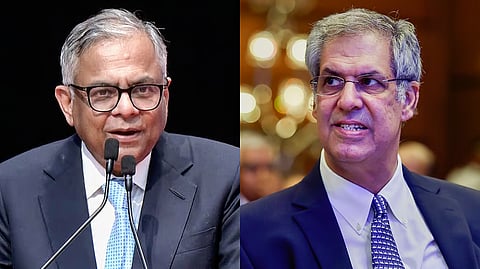
Tata Sons has two such nominee directors on its board -- Noel Tata and Venu Srinivasan. At the September 17 meeting, Noel Tata voted against Chandrasekaran's reappointment, while Srinivasan supported it.
The trusts maintain that the reappointment required the affirmative support of a majority of their nominee directors and, therefore, could not be approved without both directors voting in favour.
In a statement issued on September 20, the trusts had said the resolution was not validly passed and had "no legal effect".
They had argued that the AoA require the affirmative support of at least a majority of directors nominated by the Tata Trusts as a separate condition for board decisions, irrespective of the overall number of directors voting in favour.
(With inputs from PTI)
